
Dog Sprayed by a Skunk? Here’s How to Remove the Smell Quickly
If your dog gets sprayed by a skunk, act quickly to reduce the odor. First, keep them outside and avoid letting them rub on anything. Check their eyes, and if they look irritated, gently rinse with clean water. Then use a skunk odor remover and thoroughly treat their coat, avoiding the eyes. Rinse well and repeat if needed. Do not use tomato juice. It doesn’t effectively neutralize the smell.
Why skunk spray smells so strong?
Skunk spray smells so strong because it contains sulfur-based compounds called thiols, which are extremely potent and easily detected by the human nose even in tiny amounts. These compounds bind tightly to surfaces like fur, skin, and clothing, making the odor linger and difficult to remove. When the spray is released, it can also react with air to form additional smelly compounds, intensifying the scent. This powerful odor serves as a defense mechanism, helping skunks deter predators quickly and effectively.
What to do immediately
- Keep your dog outside to prevent the smell from spreading indoors.
- Check the eyes for redness or irritation and gently flush with lukewarm water if needed.
- Put on gloves and blot excess spray from the fur with paper towels.
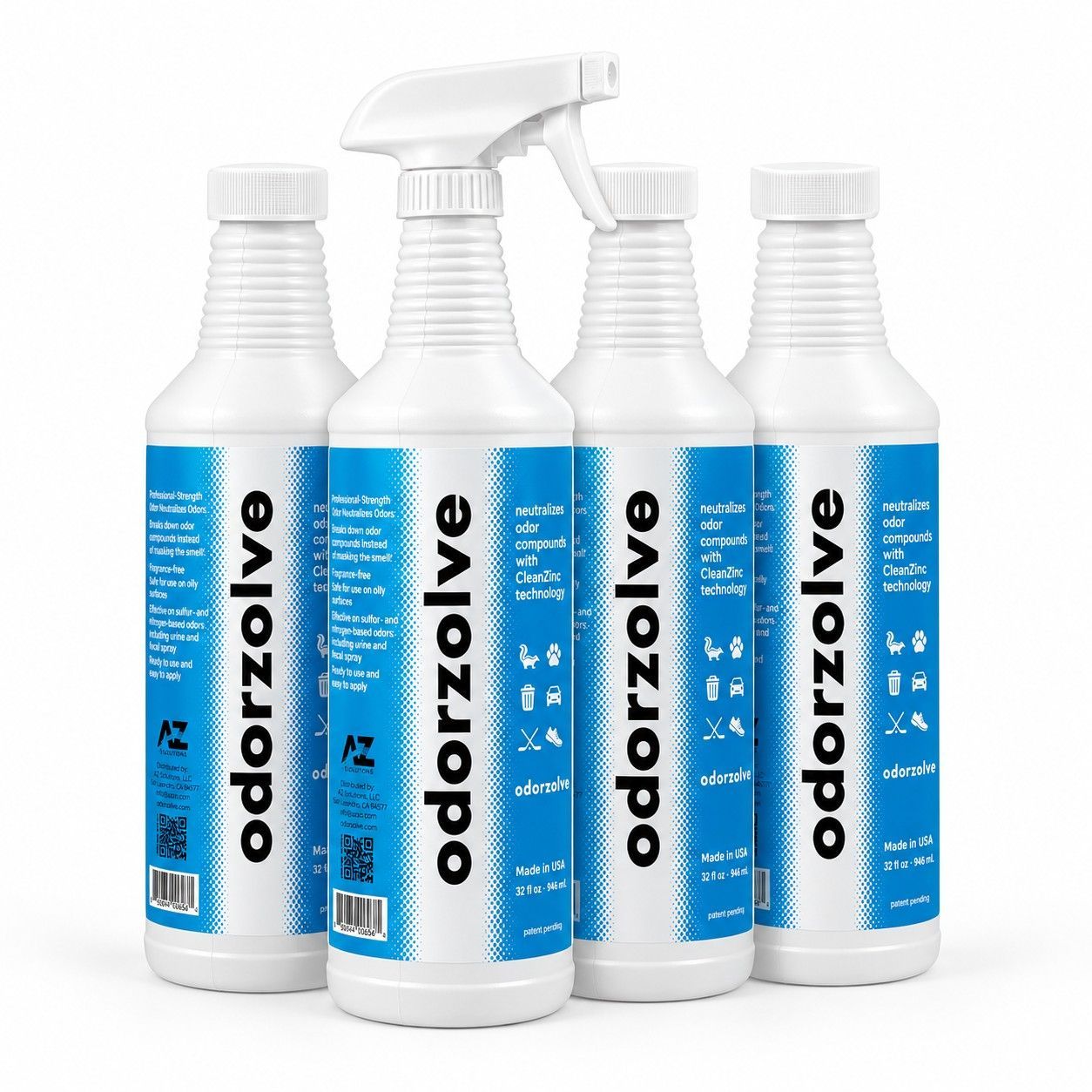
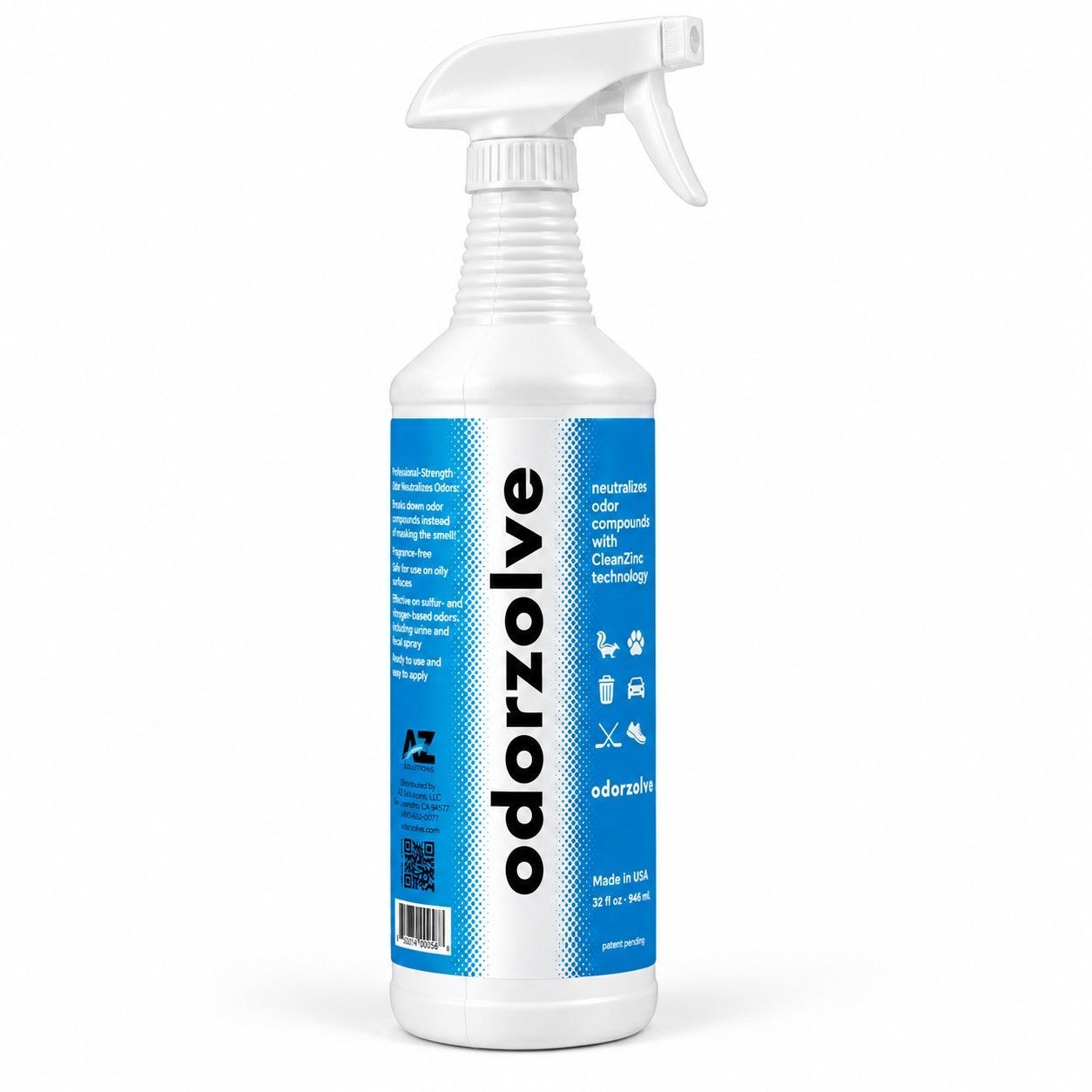
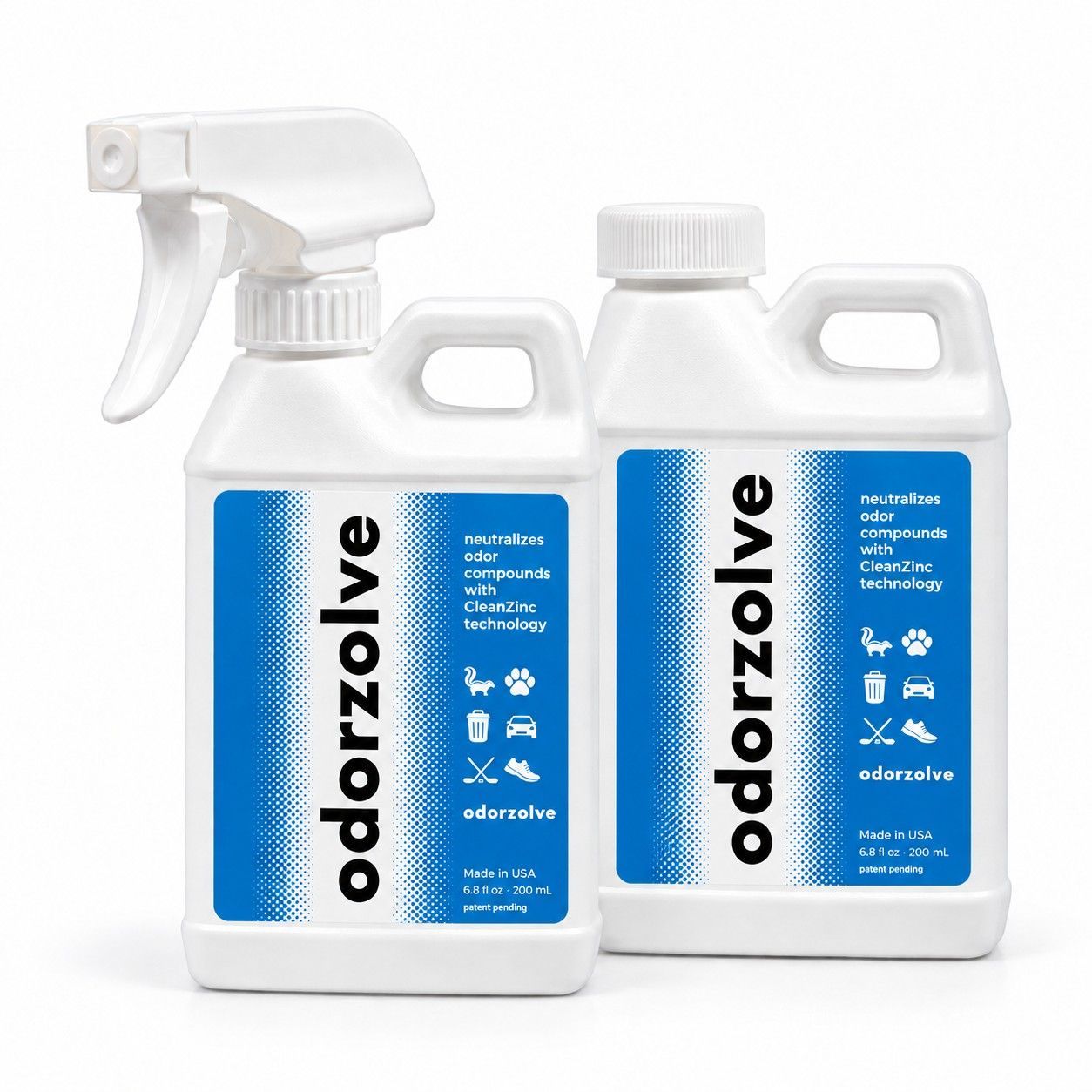
- Use a skunk odor remover, such as OdorZolve, on the affected fur.
- Work the solution into the coat carefully, avoiding the eyes, nose, and mouth.
- Let it sit for a few minutes, then rinse thoroughly with warm water.
- Repeat the process if the smell remains.
- Wash your dog with regular dog shampoo afterward.
- Contact a veterinarian if your dog was sprayed in the face, has trouble breathing, is vomiting, or seems unwell.
Common remedies and limitations
- Tomato juice myth: Tomato juice doesn’t remove skunk odor. It only masks it temporarily, and the smell often returns once your dog is dry.
- Peroxide mixtures: Some people use homemade peroxide mixtures. These must be mixed fresh, can irritate eyes, and may lighten fur. OdorZolve is a ready-to-use, fragrance-free option.
- Masking sprays: Many sprays simply cover up the smell rather than eliminate it, so they may provide short-term relief but won’t fully remove the odor.
How long does skunk smell last on a dog?
Skunk smell can last on a dog anywhere from a few days to several weeks, depending on how quickly and effectively it’s treated. Without proper cleaning, the odor can linger for 2 to 3 weeks or even longer, especially if the oils soak deep into the fur. Even after washing, the smell may come back when the dog gets wet because the skunk oils reactivate. Using a proper odor-neutralizing solution (not just shampoo or tomato juice) and thoroughly cleaning the coat as soon as possible can significantly reduce how long the smell lasts.
Can skunk odor spread in the house?
Yes. Skunk odor can spread throughout your house, and it happens faster than most people expect. Skunk spray contains sulfur-based compounds (thiols) that are extremely strong and cling to fabrics, carpets, and furniture. If a dog or person brings the smell inside, it can quickly transfer from room to room and settle into soft surfaces, making the odor linger for days or even weeks if not treated properly. Opening windows, isolating affected areas, and cleaning both the source and surrounding surfaces quickly can help prevent it from spreading further. Apply OdorZolve to the odor source, such as fur, fabric, or carpet. It is not an air spray.
Does OdorZolve™ work on fabrics and carpets?
Yes, OdorZolve™ works effectively on fabrics and carpets as long as the material is water-safe, making it a solid option for treating odors in upholstery, clothing, rugs, and pet bedding. Unlike products that simply mask smells, it is designed to neutralize odor at the source, helping eliminate lingering scents trapped deep within fibers. For best results, it’s important to clean the affected area first, then apply OdorZolve and allow it time to break down the odor. Always spot test on a small, hidden area and avoid oversaturating carpets or delicate fabrics to prevent damage or residue buildup. Have more questions? Visit our FAQ or shop OdorZolve.